
The Agentic Pivot: May 2026 SEO & Technical Web Strategy
We woke up to a digital ghost town. As Google pivots from a 'Search Engine' to an 'Agent Manager,' traditional rankings are being bypassed by autonomous workflows. Learn how we are refactoring the G.A.I.T.H Framework™ to reclaim authority in the reasoning web.
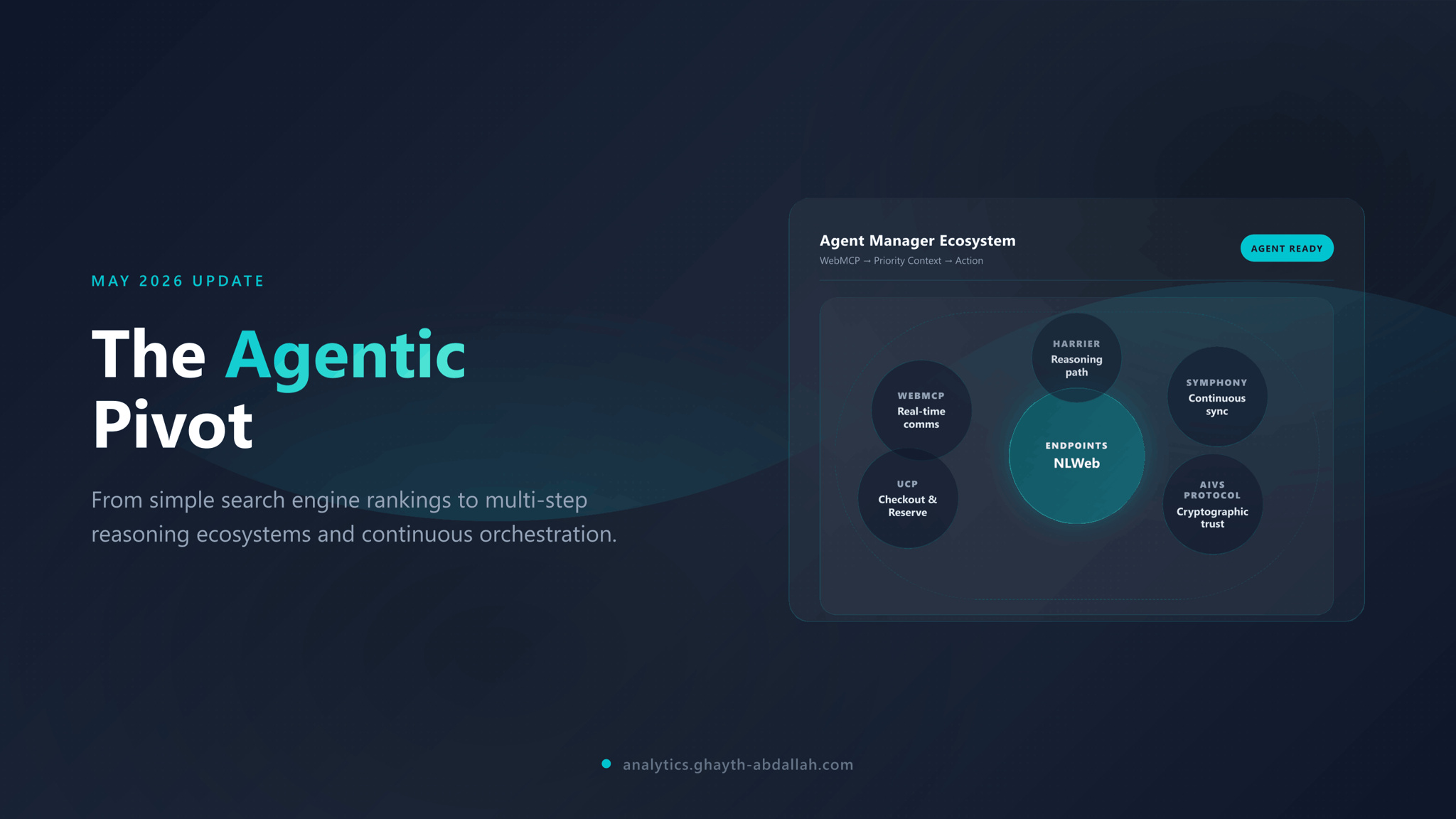
Author Note: In the late hours of April, as the 'Agent Manager' update cascaded across the GCC, years of hard-won search wins seemed to be bypassed overnight. This wasn't a manual penalty or a technical glitch—it was the sound of a fundamental shift in the web's tectonic plates. We realized that our meticulously crafted pages were no longer the final destination for the user; they had become invisible waypoints for AI agents executing multi-step tasks. To survive May 2026, we have to stop optimizing for clicks and start optimizing for orchestration.
1. The Regulatory & Compliance Layer
Enforcing Trust in the Agentic Web
Vibe-Coded SEO Standards -> Takeaway -> Don't let aesthetics "blind" the agent. The Briefing -> Google’s April 16 update for "vibe-coded" (highly interactive/aesthetic) sites mandates server-side testing to ensure AI agents can extract semantic value from visual-heavy layouts.
> The Google Shift: Google Search is now officially an "Agent Manager," and "Preferred Sources" dictate the flow of truth across all languages, meaning regional authorities must establish priority context.
Google's Agent Manager -> Task Execution -> Sundar Pichai's late-April refinement moves Google away from a "results engine" toward executing multi-step tasks. (source: Google Blog).
The March 2026 Core Update Finalization -> Takeaway -> Experience is the final filter for GCC authority. The Finalization -> Google officially completed the rollout of the March 2026 Core Update on April 29, 2026. It specifically rewards sites that demonstrate high-intent technical authority over generic AI-generated advice.
Preferred Sources -> Priority Context -> With the global rollout to all languages, users can weight specific domains as priority context for AI-generated answers.
Back-Button Hijacking -> Algorithmic Demotion -> The April 13 spam policy update strictly penalizes UX manipulation. For our MENA publishers, those AdSense vignettes (Source: Google Support) or third-party scripts accidentally triggering "Hijacking" flags must be resolved before the June 15 algorithmic demotion deadline. (Source: Google Developers).
W3C AIVS Protocol -> Cryptographic Proof -> Implementing the Agentic Integrity Verification Specification ensures your AI actions have cryptographic proof, securing trust. (Sources: IETF and W3)
SQRG E-E-A-T -> Passage-Level Clarity -> Models now scrutinize your experience and clarity at the granular passage level to satisfy the 2026 Search Quality Rater Guidelines. (Sources: Google Developers and Google Quality Team)
Data Studio Pivot -> Machine-Readable Dashboards -> Looker Studio's reversion to "Data Studio" isn't just a name change—it's a move toward simpler, agent-readable data visualizations and "Machine-Readable Dashboards". (Source: Google Support).
2. The Protocol Layer
Standardizing the Agent-to-Site Interface
> Next.js 16: The Server-First Standard -> Takeaway -> Eliminate hydration lag for agentic ingestion. The Architecture -> Next.js 16 has officially moved to a Server-First default. This shift is critical for solving the hydration delays that cause AI agents to "bypass" client-side metadata.
The Orchestration Shift: OpenAI's Symphony and Google's WebMCP move us from answering one-off prompts to serving as continuous orchestration endpoints for AI agents.
NLWeb & WebMCP -> Dynamic Endpoints -> Websites must transition from indexing pages to serving as natural language conversational endpoints for real-time interaction. (Sources: Yoast.com, Chrome Developers)
OpenAI Symphony -> Continuous Orchestration -> We must shift from optimizing for a query to optimizing for a workflow, ensuring site content acts as a step in an agent's orchestration. (Source: OpenAI)
Universal Commerce Protocol (UCP) -> Direct Transactions -> Essential for Google Merchant Center partners to allow in-search checkouts. Securing a spot on the official waitlist now future-proofs your UAE or KSA e-commerce brand for Q3/Q4. Think of the /.well-known/ucp file as the "Robots.txt for Transactions".
```javascript
// Conceptual Model: UCP Profile Setup
const ucpProfile = {
endpoint: "/.well-known/ucp",
capabilities: ["reserve", "checkout"]
};
```
Astro 6.1 & Apple MCP -> Sub-millisecond Ingestion -> Leveraging Xcode 26.3 and AI-first markdown extraction metadata ensures Apple ecosystems can read site structures instantly. (Sources: Apple, Astro)
3. The Intelligence & Semantic Layer
Grounding, Reasoning, and Private Data
> The 48.1% AIO -> Threshold Takeaway -> "Grounding" has officially overtaken "Ranking." The Data -> As of May 1, 2026, AI Overviews (AIO) appear on 48.1% of all search results. In the eCommerce sector, the overlap between AIO citations and traditional Top 10 rankings have dropped to a record low of 13.4%.
The Private Data Shift: Perplexity's Bring Your Own License (BYOL) integration with Daloopa births "Private Data SEO," allowing enterprise agents to securely search internal GCC databases provided the user has the right permissions. (Source: Perplexity)
Harrier & ReasoningBank -> Reasoning-Path Optimization -> We must audit our grounding quality using Microsoft's open-source Harrier embedding model (ranked #1 on MTEB-v2) and optimize for the paths AI takes to reason, rather than just delivering isolated facts. (Sources: Microsoft, Google Blog, Google GitHub Repo)
OpenAI Citations & GPT-5.2 -> Node of Truth -> With unique domain referrals plateauing, adapting technical documentation for GPT-5.2's "Extended Reasoning" versus "Response Speed" calibration is vital to remain a cited authority. (Sources: OpenAI, OpenAi)
Agentic Vision (Gemini 3 Flash) -> Visual Crawling -> Images are no longer just for human eyes; they must be optimized for investigative AI detecting attributes from raw pixels. (Source: Google AI Dev Docs)
4. High-Performance Infrastructure
Securing the Developer's Playbook
> The Supply-Chain Shift: Security is now an SEO imperative. The Vercel incident and Lumma Stealer threat—triggered by a developer searching for game exploits like Roblox scripts on a work machine—highlight that personal search habits are a primary attack vector for enterprise web infrastructure.
Vercel & Next.js Security -> Scoped Secret Access -> Protecting environment variables from AI-agent leaks is non-negotiable for our regional enterprise clients. We must also audit the History API to ensure SPA transitions don't pollute the history stack. (Sources: Vercel Bulletin and Next.js)
The Agent Readiness Score (ARS) -> Takeaway -> Measure your infrastructure’s "Agent Experience" (AX). The Metric -> Cloudflare’s new Agent Readiness Score measures how effectively an AI agent can navigate your site's business logic, OAuth flows, and commerce endpoints. Currently, while 78% of sites are crawlable, only 4% are declared "Agent-Ready".
TPU 8i Hardware Acceleration -> Takeaway -> Low-latency inference is now a site requirement. The Hardware -> Google’s deployment of TPU 8i hardware at the data center level ensures that agentic workflows are now hardware-accelerated, making sub-millisecond server response times mandatory for citation capture.
Cloudflare Agents Week & Shared Dictionaries -> Agentic Speed -> Reducing JSON payload sizes between Next.js and agents using shared dictionaries is a "Binary-Level SEO" win, significantly reducing the cost of token ingestion for AI crawlers. This is the next level of performance-SEO after ISR. We must also deploy dynamic edge workers and bot-specific 301 redirects to maintain "Truth Set" integrity. (Sources: Cloudflare and Cloudflare Blog)
AWS & Open Cloud Hooks -> Inference-at-Scale -> Amazon's 28% Q1 growth, driven by Agentic AI tools like Amazon Quick and Connect, means SEO-first web development must now account for how these agents scrape and summarize B2B services. Combined with the end of Microsoft's OpenAI exclusivity, GPT models now have native hooks into the entire web backend across AWS and Google Cloud. (Source: About Amazon and Microsoft Blog)
OpenAI Passkeys -> ATO Prevention -> Switching to passkeys is now a mandatory security best practice to protect agency client data from Account Takeovers. (Source: OpenAI)
Netlify & Stripe Upstream -> Functional SEO -> Deploying business infrastructure that is inherently agent-readable and functional. (Sources: Netlify and Stripe)
5. Interface SEO
Winning the Conversational SERP
> The Full-Screen Shift: The "Enter AI Mode" button demands new optimization strategies to become the primary context provider in Google's full-screen AI interface. (Source: Google)
Cross-Channel ROI Modeling -> Takeaway -> Defend your organic budget with projection data. The Update -> Google Analytics’ new Scenario and Projection Plans (released April 29) allow us to model the exact ROI of Agentic Citation Share against rising paid search costs in the GCC market.
Actionable Citations (Bing) -> Functional Schema -> We must map functional schema to trigger "Reserve," "Buy," and "Contact" buttons directly in AI chats, shifting our metric focus from "Keyword Rankings" to "Citation Share" and "Grounding Intent" in Bing Webmaster Tools. (Sources: Bing and MSN)
Meta Ads MCP -> Ad-Agent Optimization -> Meta's open ads ecosystem allows third-party AI tools (like ChatGPT and Claude) to manage campaigns via MCP, demanding metadata that is perfectly readable by these new connectors. (Source: Business Facebook)
In-Flight Data Extraction -> Edge Processing -> Content must be structured optimally for the Cloudflare/OpenAI Agent Cloud edge-processing model. (Source: Cloudflare)
Pages don’t compete. Systems do.
6. Strategic Execution
Integrating the GAITH Framework™
To secure our presence in this new reality, we must bridge these technical gaps with the GAITH Framework™, replacing generic tactics with structured clarity. (Source: Framework™)
The Lead-Gen Pivot -> Compliance Automation -> We believe the immediate opportunity lies in using the GAITH Lead Engine to automate compliance audits, identifying local prospects actively violating the Back-Button policy. (Source: User Guide)
Your Mission: You have a new SEO task! Click the back button on your own site. If you get trapped by a giant AdSense vignette, panic mildly. Then, delete that script before June 15th so the bots don't algorithmically ground your website like a misbehaving teenager.
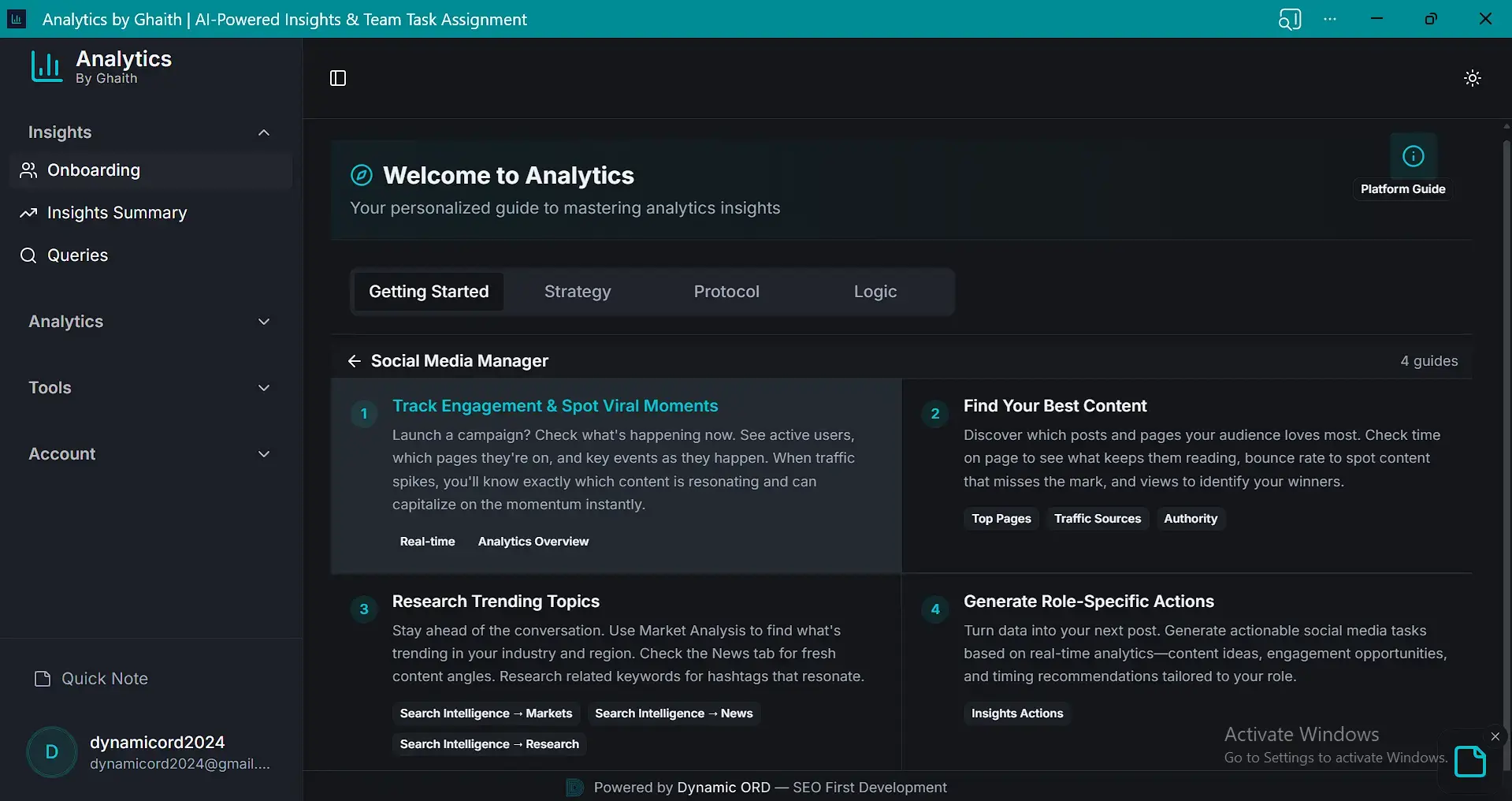
Google Analytics Planning -> Cross-Channel Budgeting -> Utilizing GA's new Scenario and Projection Plans helps us prove the concrete ROI of Agentic SEO versus traditional paid search investments in the Gulf. (Source: Google)
The Experience Gap -> Entity Proof -> We must systematically map missing entity proofs to fortify our E-E-A-T credentials.
1. The History Stack & Ad-Tech Audit
Analyze the site architecture to isolate and eliminate Back-Button Hijacking risks from third-party scripts.
2. Harrier Grounding Score Analysis
Evaluate and elevate the grounding quality of existing content using open-source embedding models.
3. NLWeb-Compliant Schema Nodes
Implement standard protocols to ensure seamless, real-time agent interaction.
By June 2026, most websites will still optimize for keywords.
And they will become invisible—not because they are bad,
but because they are irrelevant to how AI systems operate.
FAQ
How do I protect my Next.js environment from agent leaks?
Implement Scoped Secret Access and mandate passkeys for all developer environments to mitigate supply-chain risks.
What is the first step to preparing for WebMCP?
Start by structuring your data using NLWeb principles and configuring a conceptual Universal Commerce Protocol endpoint if you are an e-commerce brand.
How does Agentic SEO differ from traditional SEO in the GCC?
Traditional SEO optimized for query-based ranking. Agentic SEO optimizes for task-based workflows and "Citation Share," ensuring your content is a trusted node for AI agents serving regional business leaders.
How do I know if my site is at risk for a Back-Button Hijacking penalty?
Audit your third-party Ad-Tech scripts, especially those handling vignettes or pop-ups, to ensure they do not manipulate the browser's history stack before the June 15 deadline.
How can I test my content's 'Reasoning-Path' quality?
Run your core pages through Microsoft’s open-source Harrier embedding model (ranked #1 on MTEB-v2) to generate a Grounding Score, revealing how easily an AI can parse your logical flow.
How do I trigger 'Reserve' or 'Buy' buttons directly in AI interfaces like Bing?
You must map functional, action-oriented schema to your pages and configure your /.well-known/ucp profile to expose your transactional capabilities directly to the agent.
Can I optimize internal, private databases for AI Search?
Yes. With "Private Data SEO" and frameworks like Perplexity’s BYOL, enterprise agents can securely crawl and reference your internal GCC databases, provided the end-user holds the correct license permissions.
Found this valuable?
Let me know—drop your name and a quick message.

Written by
Ghaith Abdullah
AI SEO Expert and Search Intelligence Authority in the Middle East. Creator of the GAITH Framework™ and founder of Analytics by Ghaith. Specializing in AI-driven search optimization, Answer Engine Optimization, and entity-based SEO strategies.